back to top
Home Blog Page 2

Best Samsung Galaxy Flip 6 Cases

0

Looking to protect your new Samsung Galaxy Z Flip 6 while keeping its sleek design intact? The right case can offer both style and durability, making sure your foldable phone stays safe from everyday drops and scratches. Whether you prefer a slim, transparent case to showcase your device or a rugged, heavy-duty option for maximum protection, there’s something for everyone. In this article, we’ve rounded up the best Samsung Galaxy Z Flip 6 cases available right now, featuring top picks for design, functionality, and value. Read on to find the perfect case that matches your lifestyle and keeps your phone looking brand new.

Here Are The Top 10 Best Samsung Galaxy Flip 6 Cases

Must Read:Best Android Phones Under 100k in 2025

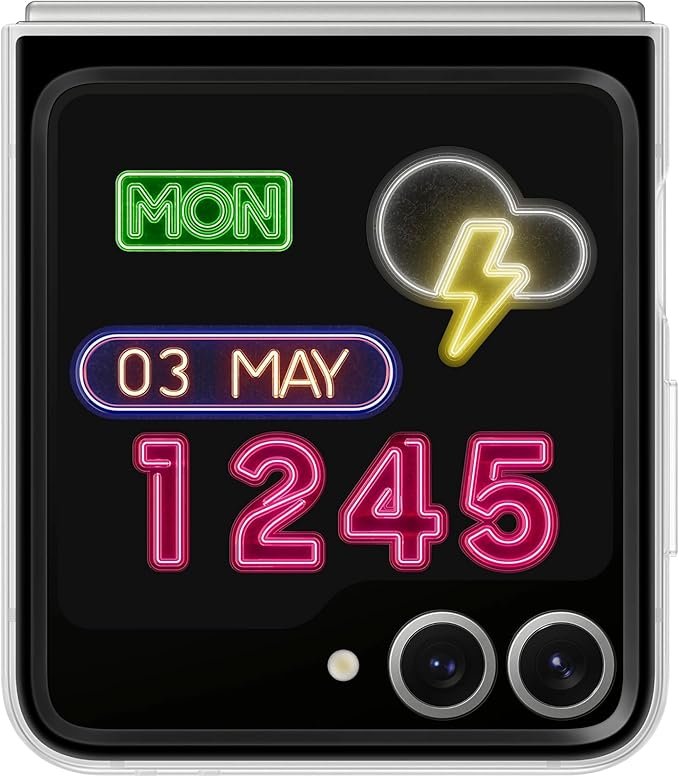
1. Samsung Flipsuit (LED interactive)

Samsung Flipsuit (LED interactive)

BUY HERE

This official Samsung case brings flair with a motion‑activated LED interactive card,change the card, change the vibe on your cover screen. It syncs with your phone via NFC, lighting up your style with every tilt and touch   .

Vibe check: Imagine cruising down the Expressway at night,your phone lights up like the city lights. It’s a conversation starter and selfie magnet.

2. VRS DESIGN Orb Wallet Phone Case

VRS DESIGN Orb Wallet Phone Case

BUY HERE

Carrying 2 cards is simple with the built-in wallet slot, while the accessory kickstand adds ease for hands-free Netflix or TikTok time. It even protects the hinge with a raised bezel .

Why it suits you: Whether you’re hustling in the market or chilling with friends, this case merges convenience with protection,keep your ATM and SIM cards safe.

3. CENMASO Wallet Case with RFID & Hinge Protection

CENMASO Wallet Case with RFID & Hinge Protection

BUY HERE

This rugged case locks in hinge protection from every angle and even blocks RFID,no contactless card worries. Its shockproof body and screen protector really guard your Flip 6 .

Ideal for: Taxi drivers, street vendors, or anyone on the move,your phone and bank details are secure in one smart package.

4. i‑Blason Armorbox (with belt clip)

i‑Blason Armorbox (with belt clip)

BUY HERE

360° drop protection with TPU + PC frame, built-in screen protector, and a belt-clip for easy carry,this case snugly fits your Flip 6 while you’re on the go  .

Relatable perk: Perfect for delivery riders or anyone zipping through the traffic, clip it, ride, unfold when you park.

5.DAKORIE ‑ with Ring Stand

BUY HERE

A blend of elegance and utility: 9H tempered glass back, built-in ring that doubles as a stand, front screen protector, and wireless charging compatibility 

Style statement: Great for the trendsetter who catches up on Nollywood while cooking food or watching Ignite concerts.

6. WATACHE Transparent Shock‑Resistant Phone Case

WATACHE Transparent Shock‑Resistant Phone Case

BUY HERE

Clear PC back, 4‑corner shockproof design, hinge cover and a hidden slot for a card,carries essentials with solid drop protection  .

Use case: Airline passengers, road trippers,your Flip is safe and styled, without hiding its original color.

7. i‑Blason Cosmo (slim clear with front cover)

i‑Blason Cosmo (slim clear with front cover)

BUY HERE

Loved for its smooth finish, strong hinge, front screen protection without peel-and-stick shields. Users describe it as “a really good cover”  .

For: Those who prefer a minimalist look but still want dependable protection, think corporate, sleek, functional.

8. URBAN ARMOR GEAR (UAG Plyo Pro)

URBAN ARMOR GEAR (UAG Plyo Pro)

BUY HERE

A military-grade, drop-tested shell crafted from TPU and polycarbonate with anti-yellowing, magnetic wireless charging compatible,rugged but sleek  .

For the adventurer: Whether trekking or handling daily milling in your street, this case can take it and still look clear and clean.

9. MOAITO Case with Mirror & Ring Stand

BUY HERE

Includes a flip‑open mirror and ring stand, full hinge protection, shockproof shell, and supports wireless charging  .

Relatable moment: Quick makeup check in traffic? Snap a pic while cooking? This one’s built for style and function.

10. VVUPIC X‑Ray UV Print Case with Dual Card Holder

BUY HERE

Clear case with UV-reactive design, two card slots, hinge protection and MagSafe-style compatibility  .

For the bold: Let your personality shine,UV print lights up your style, and you still carry your bank and ID cards.

Best Android Phones Under 100k in 2025

0

Think you can’t get a good Android phone under ₦100,000 in Nigeria without sacrificing quality? Think again.

Most people believe that once a phone is cheap, it must have a poor camera, slow performance, or a battery that won’t last half a day. But these days, some budget smartphones are proving everyone wrong. You can now get a sleek, reliable phone that won’t swallow your entire salary.

We’ve done the heavy lifting for you, no need to stress over confusing specs or tech jargon. Whether you’re buying for yourself or someone else, here are some solid phones that give you real value for your money.

Must Read:Cybersecurity for Small Businesses: 10 Tips Every Nigerian Business Owner Should Know

Here Are The Best Android Phones Under 100k

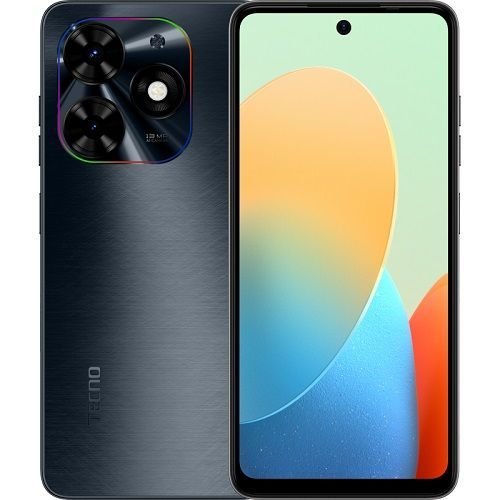
1. Tecno Pop 8 

Tecno Pop 8

Price: ₦94,600

If you want a phone that doesn’t lag when you’re chatting on WhatsApp, scrolling through TikTok, or watching skits on YouTube, the Tecno Pop 8 is a great pick. It comes with a large 6.6-inch display and a 90Hz refresh rate that makes everything feel super smooth even on a budget.

Powered by the Unisoc T606 chip, you get 3GB or 4GB of RAM depending on the version you buy, and that’s enough to handle basic multitasking. The camera setup is decent too, with an 8MP selfie cam and a rear camera for your casual shots.

Add in a 5000mAh battery and USB-C charging, and you’ve got a reliable phone for everyday use. And yes, it runs on Android 13 Go Edition, which is designed to run fast on lower-end devices.

Tecno Pop 8 Specifications

• Display Size: 6.6 inches (720 x 1612)

• Display Type: IPS LCD, 90Hz

• RAM & Storage: 3/4 GB RAM, 64/128 GB

• Operating System: Android 13 (Go Edition)

• Chipset: Unisoc T606

• Camera: 13MP + 0.08MP; Selfie: 8MP

• Battery: 5000mAh   

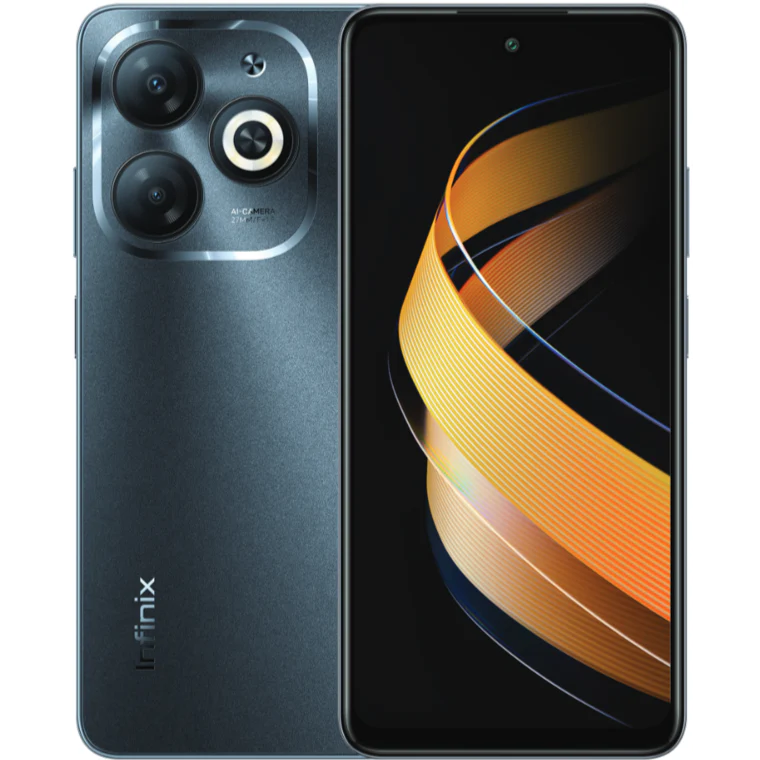
2. Infinix Smart 8

Price: ₦94,700

The Infinix Smart 8 is another solid choice for under 100k. It’s got a similar 6.6-inch screen with a smooth 90Hz refresh rate, which makes your daily use feel way better than you’d expect at this price.

It runs on the same Unisoc T606 chip as the Tecno Pop 8, with up to 4GB of RAM and 128GB storage,plenty of space for apps, photos, and those endless WhatsApp group chats. The 13MP rear camera and 8MP selfie cam are pretty decent for your regular snaps, and the fingerprint sensor adds some security too.

Battery life? You’re covered with a 5000mAh battery that lasts from morning till night.

Infinix Smart 8 Specifications

• Display Size: 6.6 inches (720 x 1612)

• Display Type: IPS LCD, 90Hz

• RAM & Storage: 2/3/4 GB RAM, 64/128 GB

• Operating System: Android 13

• Chipset: Unisoc T606

• Camera: 13MP + 0.08MP; Selfie: 8MP

• Battery: 5000mAh

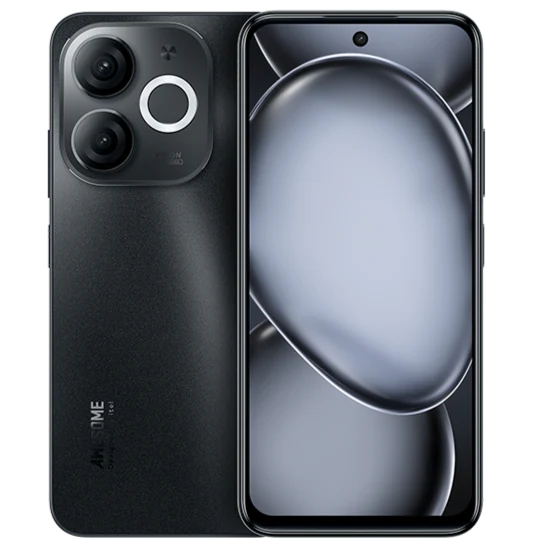
3. Itel A80

Itel A80

Price: ₦89,900

Looking for a phone that can do a bit of everything? The Itel A80 might just be your plug.

It packs a large 6.7-inch screen with a refresh rate that goes up to 120Hz.Y es, you read that right. That’s something you rarely see in phones under 100k. It also comes with a 50MP rear camera that takes crisp photos, and an 8MP front cam for clear selfies.

Under the hood, it’s powered by the Unisoc T603 chip and runs Android 14. With 128GB of storage and up to 8GB RAM (including virtual RAM), you won’t be complaining about slowdowns any time soon.

Itel A80 Specifications

• Display Size: 6.7 inches (720 x 1600)

• Display Type: IPS LCD, 120Hz

• RAM & Storage: 3/4 GB RAM, 128 GB

• Operating System: Android 14 (itel OS 14)

• Chipset: Unisoc T603

• Camera: 50MP; Selfie: 8MP

• Battery: 5000mAh

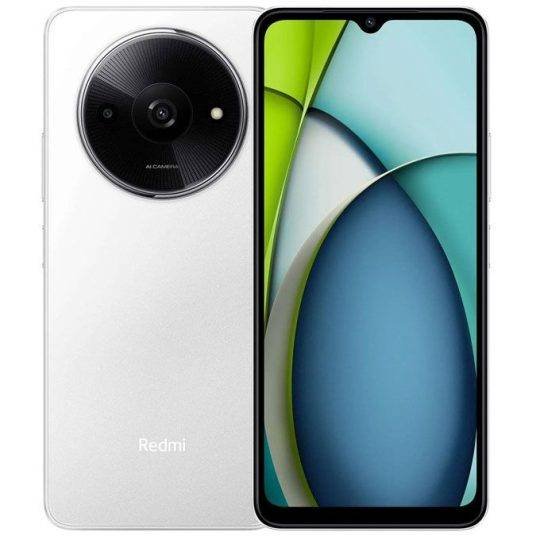
4. Xiaomi Redmi A3x

Price: ₦89,900

If you’re into phones that look expensive but aren’t, the Redmi A3x is your guy. Its glass-like design and 6.71-inch screen give it that sleek, modern feel.

It also comes with a smooth 90Hz display, runs Android 14 with Xiaomi’s clean MIUI interface, and is powered by the Unisoc T603 processor,great for basic daily tasks. Storage is generous too: you get either 64GB or 128GB, and you can expand it with a memory card up to 1TB.

And of course, the 5000mAh battery means you’re covered for a full day of calls, browsing, and maybe even a Netflix episode or two.

Xiaomi Redmi A3x Specifications

• Display Size: 6.71 inches (720 x 1650)

• Display Type: IPS LCD, 90Hz

• RAM & Storage: 3/4 GB RAM, 64/128 GB

• Operating System: Android 14 (MIUI)

• Chipset: Unisoc T603

• Camera: 8MP; Selfie: 5MP

• Battery: 5000mAh

5. Itel A50C

Itel A50C

Price: ₦80,800

Sometimes, you just want a phone that works,calls, texts, video calls, and social media. The Itel A50C does all that without drama.

It features a 6.56-inch screen, 4G support, USB-C charging, and a rear fingerprint sensor. It only has 2GB RAM, but Itel uses something called “MemFusion” to boost performance by converting some storage into virtual RAM. That’s a clever way to stretch performance on a tight budget.

With 32GB of storage (expandable), Android 14, and a solid battery, it’s a great pick for students, side hustlers, or anyone just looking to stay connected.

Itel A50C Specifications

• Display Size: 6.56 inches (720 x 1612)

• Display Type: IPS LCD

• RAM & Storage: 2 GB RAM, 32 GB

• Operating System: Android 14

• Chipset: Unisoc T603

• Camera: 8MP; Selfie: 5MP

• Battery: 4000mAh

6. Itel A06

Itel A06

Price: ₦75,300

Looking for something super affordable,maybe for your younger sibling or as a secondary phone? The Itel A06 is one of the cheapest Android phones under 100k that still gets the job done.

It’s got a 6.56-inch display, a quad-core processor, and a 4000mAh battery that easily lasts a day. You also get security features like fingerprint unlock and face unlock, plus Android 14 Go Edition to keep things running light and smooth.

Nothing fancy here, just a simple, reliable smartphone for basic needs.

Itel A06 Specifications

• Display Size: 6.56 inches (720 x 1612)

• Display Type: IPS LCD

• RAM & Storage: 2 GB RAM, 32 GB

• Operating System: Android 14 (Go Edition)

• Chipset: Unisoc SC9832E

• Camera: 5MP; Selfie: 5MP

• Battery: 4000mAh

Conclusion

Searching for Android phones under 100k in Nigeria used to mean settling for slow devices with poor cameras and batteries that barely lasted half a day. But things have changed. Whether you’re looking for big screens, smooth displays, decent cameras, or all-day battery life, there’s now something for everyone,even on a tight budget.

So if your current phone is acting up or you just want something affordable that works, any of these picks will serve you well without draining your wallet.

Cybersecurity for Small Businesses: 10 Tips Every Nigerian Business Owner Should Know

We can all agree that running a modern business without the internet is almost impossible. Whether you’re a small fashion brand in minna, a fintech startup in Lekki, or a poultry business in Jos using WhatsApp to take orders, the internet opens doors to new markets and makes operations smoother. But as we all enjoy these digital benefits, we also have to face a growing problem, cyber threats.

Online fraud is no longer just about 419 emails or fake alerts; digital information theft is now one of the most common crimes worldwide, even in Nigeria. Every business, no matter how small, needs to take cybersecurity seriously,not just to protect their operations, but also to build trust with customers.

If you’re a small business owner in Nigeria, here are some guidelines to keep you on track and help u secure your business.

Must Read:The Career Value of a Project Management Certificate

10 simple but effective cybersecurity tips to help you protect your hustle:

10 simple but effective cybersecurity tips to help you protect your hustle:

1. Train Your Staff, Even That NYSC Intern

Start with the basics. Make sure your team knows how to set strong passwords, avoid clicking on suspicious links, and understand what’s okay (and not okay) to do online during work hours. Don’t assume people know, spell it out and create a simple guide everyone can follow.

2. Keep Your Devices Clean

Whether you’re using a laptop in your shop or your staff is working remotely, ensure your systems have updated antivirus software and the latest version of the operating system. It might feel like a chore, but one outdated app can leave you wide open to hackers.

3. Use a Firewall

A firewall helps block unauthorised access to your network. Most operating systems have one built-in,just make sure it’s turned on. If you or your team work from home, ensure their devices are protected too. Don’t assume Glo or MTN’s internet bundle is also providing security,it’s not.

4. Secure Your Mobile Phones – Cybersecurity tips

Let’s be honest,most of us run our businesses from our phones. If that’s you, then your mobile is as important as your laptop. Use a strong password or biometric lock, install security apps, and avoid connecting to free Wi-Fi in cafes or airports without protection. And if the phone gets stolen (God forbid), know how to report and remotely wipe your data.

5. Back Up Your Business Data Like Your Life Depends on It (Because It Does)

Imagine losing all your customer records, payment history, and inventory details overnight. Painful, right? Set up weekly (or daily) backups. You can use an external hard drive or cloud services like Google Drive or Dropbox. It’s better to spend a little now than lose everything later.

6. Limit Who Has Access to What

Not everyone in your team needs to see or edit everything. Give people access to only the files and tools they need. Also, avoid using one general login for everyone. Create individual user accounts and ensure only trusted staff have admin rights.

7. Secure Your Wi-Fi Like You Secure Your Business Location

If you run a shop, office, or work-from-home setup with Wi-Fi, make sure it’s password protected and not visible to the whole neighborhood. Change your router’s default login details, use a strong password, and avoid sharing it with just anyone,especially that customer who came to “browse small.”

8. Handle Online Payments with Care

If you accept online payments (via Flutterwave, opay, etc.), work closely with your payment processor to ensure you’re using secure methods. Avoid using the same device for business payments and personal browsing. Don’t play with people’s card details—Na serious matter o!

9. Don’t Let Staff Install Just Anything

A single downloaded game or free app can open your entire system to viruses. Let staff know they must get permission before installing anything on company devices. It’s not about policing,it’s about protecting your business.

10. Use Strong Passwords and 2FA (Two-Factor Authentication)

Encourage your team to use unique passwords and change them regularly. Better still, enable two-factor authentication for platforms you use, especially your email, social media, and financial tools. It’s a simple step that can save you big trouble later.

Final Thoughts: It’s Your Business. Secure It Like Your Baby.

Cybersecurity might sound like something only big companies worry about, but even the smallest naija business is a target. As long as you’re online, you need to protect yourself.

You don’t need to break the bank to get started,just being aware, setting up basic protections, and educating your team can go a long way.

Stay safe, stay sharp, and keep building your business with confidence.

Why Every Startup Needs a Tech Plus Web3 Strategy in 2025

2025 has moved fast. At the start of the year, many of us set resolutions, some planned to launch new businesses, whether small-scale side hustles or bold ventures. Now, with just a few months left until we shout another “Happy New Year,” some of those plans still haven’t materialized.

Yes, it’s okay to believe that delays are not denials, but it’s even wiser to ask: what’s causing the delay? The truth is, time is not on our side. One key reason many startup ideas stall is the sheer competitiveness of today’s business environment.

The world is evolving rapidly. It’s becoming faster, more decentralized, and full of ambitious innovations waiting to be launched. And that’s exactly how our businesses need to evolve too.

Unfortunately, many startups are being outpaced, they are challenged by advancements in artificial intelligence, blockchain, and the broader Web3 ecosystem. In today’s world, having a great idea isn’t even enough. Success now requires aligning that idea with cutting-edge technology and a forward-looking digital strategy.

This is why every startup in 2025 needs a Tech plus Web3 strategy. It’s not just relevant. It’s essential.

Imagine coming up with a business plan or launching a product from scratch every time you want to.

The Rise of Tech-Driven Startups

Technology has always been a core driver of startup innovation, but in 2025, foundational tech like AI, cloud computing, data analytics, and automation tools have reached new levels of maturity. These days, you don’t have to build your own “Business or product plan” from scratch every time you want to start up something for yourself. Instead, you have access to some super-powered engines for that.

However, tech alone is not the only differentiator. What separates the next generation of disruptors is their ability to combine mainstream technology with decentralized principles and Web3 tools.

Also Read: 5 Common Mistakes New Brands Make When Starting Up

Understanding Web3: Beyond Crypto

Web3 is often misunderstood as just another word for cryptocurrency. In a real sense, it represents a broader shift toward decentralized digital ecosystems, where ownership, identity, and value are distributed across networks rather than controlled by central authorities. 

Web3 introduces capabilities such as:

  • Decentralized Identity (DID) for user control over data
  • Smart Contracts for automating trustless transactions
  • Token Economies for incentivizing user participation
  • DAOs (Decentralized Autonomous Organizations) for collective governance
  • NFTs and digital ownership for new business models in content, gaming, and more

For startups, these are not theoretical concepts – they’re building blocks for more resilient, transparent, and community-driven products.

Why Startups Must Adopt a Tech + Web3 Strategy

1. Early Mover Advantage

Web3 is still in a formative stage. Startups that embrace it now can shape the rules, build communities, and establish brand authority before mass adoption catches up. Think of it as getting into mobile apps in 2009 or cloud SaaS in 2012.

2. Access to Global Capital

Tokenized assets, decentralized fundraising (e.g., ICOs, IDOs), and community-driven investment platforms offer alternative paths to traditional venture capital. Startups can now tap into global liquidity without being tied to a single region or investor class.

3. Incentivized User Growth

Tokens and NFTs enable startups to build viral growth loops by directly rewarding users for their engagement, loyalty, and referrals—something traditional models struggle to do at scale without massive ad spend.

4. Trust Through Transparency

Smart contracts and on-chain data build trust. For sectors like fintech, supply chain, and digital identity, a transparent protocol can be more persuasive than marketing copy. Users and partners are more likely to trust systems they can audit.

5. Platform Independence

Building on Web3 reduces reliance on big tech platforms like Google, Apple, or Facebook. Decentralized architecture gives startups more control over their roadmap, user relationships, and data policies.

Real-World Examples of Tech + Web3 in Action

  • Helium uses blockchain to incentivize people to build wireless infrastructure.
  • OpenSea pioneered the NFT marketplace space, empowering artists and creators without intermediaries.
  • Gitcoin funds open-source developers using Web3 mechanisms like quadratic funding.
  • Lens Protocol is reinventing social networking by giving users control over their content and followers.

Each of these startups marries traditional tech capabilities with the Web3 ethos, demonstrating that the two are not mutually exclusive—they are synergistic.

What a Tech + Web3 Strategy Looks Like

A startup’s roadmap in 2025 should include:

  • AI and data automation to build smarter products
  • Cloud-native development for scale and flexibility
  • A blockchain or L2 solution that aligns with the product’s mission (e.g., Ethereum, Solana, Polygon, etc.)
  • Tokenomics design for community building and monetization
  • Web3-compatible user onboarding with wallet integrations and DID support

Crucially, founders must balance innovation with usability. Web3 is still maturing, and users expect seamless experiences. A hybrid approach, leveraging both centralized and decentralized technologies, can help bridge that gap.

Final Thoughts

The startups that will define the next decade are already building today. And they’re doing it with a Tech + Web3 mindset. In 2025, this is no longer optional- it’s the new baseline.

At the end of the year, if you embrace decentralization not as a gimmick, but as a fundamental shift in how we build, govern, and scale businesses. If you’re launching a startup this year, make sure your strategy isn’t just tech-forward, it should be Web3-ready too.

The Career Value of a Project Management Certificate

1

If you’re looking to advance your career in project management, enrolling in a graduate certificate program could be the next strategic step. A graduate certificate in project management is crafted to give you the practical knowledge and essential tools needed to handle real-life project challenges with confidence and skill. Whether you’re looking to enhance your earning potential or prepare for higher-level certifications, this course offers a strong starting point.  

So, what does a graduate certificate in PM involve? In this guide, we’ll cover everything you need to know,from course structure and curriculum to entry requirements and career opportunities.

Must Read:Top-notch Interview Tactics to Understand Your Customers Better

What Is a Graduate Certificate in Project Management?

What Is a Graduate Certificate in Project Management?

A graduate certificate in project management is a postgraduate qualification designed to provide you with foundational and practical expertise in managing projects effectively. It equips you with key competencies in areas such as project scope, scheduling, risk management, and quality control.  

These programs are typically offered in various formats:full-time, part-time, or entirely online,making it easier for professionals to study alongside their existing commitments. This flexibility makes it an ideal choice if you are working or have personal responsibilities that require a more adaptable learning schedule.  

Although course content may vary slightly among institutions, most programs cover core aspects of project management, making them suitable for anyone looking to build a solid foundation in this field.

What You’ll Learn in a Project Management Certificate Program

The specific subjects included in a graduate certificate in project management can differ depending on the course provider. However, most programs follow a consistent structure aimed at providing applicable skills across different industries. Common topics covered include:

– Applied project management skills: Learn how to approach real-world challenges by working through case studies, developing critical thinking abilities, and applying technical strategies to solve business issues. You may, for example, explore how to manage projects in sectors like software development or construction.

– Modern project methodologies: Gain insight into contemporary project management approaches, including Agile, and how to use them to add value to organizations and stakeholders.

Typically, a graduate certificate program consists of three core units. While names may differ by institution, you’ll likely encounter modules such as:

– Managing Project Scope and Stakeholders  

– Project Risk and Quality Management  

– Project Scheduling and Control  

Before enrolling, it’s wise to review the course syllabus or brochure from your chosen provider to confirm the topics align with your goals. You may also want to consult the admissions office for additional guidance on course specifics.

Career Prospects with a Graduate Certificate in Project Management

Completing a project management course with certification can open the door to various professional roles. The course equips you with versatile skills that are in demand across multiple industries. Potential career paths include:

– Project Manager  

– Project Officer  

– Program Manager  

– Program Management Officer  

– General Manager  

These roles are available in sectors such as healthcare, technology, finance, and construction. Whether you’re seeking full-time employment or freelance opportunities, the certificate can significantly boost your employability and career growth.  

Additionally, this certification can be a stepping stone toward further education. Many graduates go on to pursue a graduate diploma or a master’s degree in project management, which can enhance their qualifications and eligibility for higher-level roles with better compensation.

Entry Requirements for a Graduate Certificate in Project Management

Admission criteria for a certification in project management can vary between institutions. Generally, applicants are expected to have:

– A bachelor’s degree or equivalent qualifications  

– At least five years of relevant work experience  

Make sure to verify the specific prerequisites with your chosen provider, as the definition of “relevant experience” may differ.  

The application process usually includes submitting an online form, providing your resume, and writing a brief statement outlining your motivation for enrolling in the course. Admissions teams are typically available to offer assistance during this process.

Final Thoughts

A certificate in project management is a valuable qualification for professionals seeking to advance in the project management field. It not only offers foundational knowledge and practical skills but also creates opportunities for further study and career advancement.

Many universities and online platforms offer this certification.Whether you’re starting out or looking to grow in your current role, this certificate can help you take meaningful steps forward in your project management career.

If you’re interested in learning courses like Data science and Content Creation you can checkout Paritielg.

Top-notch Interview Tactics to Understand Your Customers Better

0

Interview Tactics to Help Your Startup Succeed

One of the most crucial steps in launching a successful startup is defining your target market the specific audience your product or service is meant to serve. Without a clear understanding of who your ideal customers are, it’s difficult to tailor your offering or build an effective digital marketing strategy. Getting this right can be the difference between a business that thrives and one that fades out.

But how do you figure out who your target audience truly is? The answer lies in smart interview tactics intentional conversations with potential or current customers that help reveal their behaviors, preferences, and pain points. Done right, these interviews can shape your product, improve your services, and fuel your marketing decisions.

Must Read:10 BEST PROJECT MANAGEMENT TOOLS IN 2025

Why Customer Interviews Are Important

The startups that truly understand their customers hold a major edge over competitors. While it’s easy to assume that your product solves a need, the real-world market is often more complex. Understanding how people behave rather than just what they say is where real insights begin.

Effective interview tactics doesn’t stop at surface-level feedback. Talking directly to users and observing their responses gives you deeper insight into what drives their decisions. This helps you build a more accurate customer profile, validate interest in your offering, and even resolve service issues before they escalate.

With that in mind, let’s look at the top interview tactics you can use to extract the most valuable insights from your customers.

1. Identify Who You’re Interviewing

Not all feedback is created equal. Before diving into interviews, it’s important to categorize your interviewees. Understanding who you’re talking to shapes how you interpret their responses. You’ll usually encounter four types of people:

– Advocates: Happy customers who love your product.

– Angry users: People who were disappointed with their experience.

– Lost users: Those who used your product before but stopped.

– Nonusers: Potential customers who haven’t interacted with your brand yet.

Startups often rely on nonusers due to limited customer history. Engaging with this group helps you explore market size and understand potential blockers to adoption. To find interviewees, explore social platforms, attend relevant events, or join online forums where your target audience gathers. Focus on building rapport first don’t jump into a sales pitch.

 2. Collect the Right Data

Strong interview tactics involve more than casual conversations you need to gather structured insights. Aim to collect four core data types:

– Identity Data: Basic demographics like age, gender, location, and job role. This helps segment your market accurately.

– Engagement Data: Understand how users interact with your brand. Ask open-ended questions to explore their journey.

– Behavioral Data: Dive into their shopping habits,what influences their buying decisions and what triggers loyalty.

– Attitude Data: Capture emotional and personal experiences. Ask about their perceptions of your product and even competitors.

By organizing your interviews around these data types, you’ll extract more actionable feedback and understand your audience on multiple levels.

3. Switch Up Your Interview Formats

Great interview tactics require flexibility in how you conduct your conversations. Consider using multiple interview formats depending on the person and the context:

– Structured Interviews: These use a fixed set of questions and are easy to analyze but may lack depth.

– Semi-Structured Interviews: A guided format where you follow a script but allow room for deeper exploration. This strikes a balance between consistency and depth.

– Unstructured Interviews: Casual, open-ended conversations that often yield the most honest and detailed responses.

Using a mix of formats allows you to accommodate different personality types. Some people want to get straight to the point, while others are willing to share rich personal stories, both types offer valuable input.

4. Pair Up for Interviews

Another powerful interview tactic is to conduct interviews in pairs. Having two interviewers can reduce tension for the participant and help you gather more accurate data. One person can lead the questions while the other focuses on note-taking and observing non-verbal cues.

Body language, facial expressions, and tone often reveal more than words. When one person facilitates and the other listens intently, you’re less likely to miss key insights.

5. Avoid Asking Biased Questions

One of the biggest mistakes in customer interviews is turning them into unintentional sales pitches. Avoid asking questions that nudge people toward a favorable answer. Examples include:

– “Do you think our product is a game-changer?”

– “Wouldn’t this feature help your daily routine?”

– “Don’t you think the price is reasonable?”

These questions put pressure on the interviewee and compromise the integrity of your insights. A better interview tactic is to ask neutral, open-ended questions that encourage honesty. Your goal is to understand not to sell.

6. Probe for Specifics

If someone gives a vague or generic answer, don’t let the conversation stop there. Dig deeper with specific follow-up questions like:

– “Can you walk me through that experience?”

– “When did that happen?”

– “Why do you think that issue came up?”

These type of questions encourage people to share more detailed stories, which are often goldmines for product improvement or customer journey mapping. The more specific the answer, the more actionable the insight.

7. Wrap Up with Purpose

As your interview winds down, two final questions can bring even more value:

1. “Is there anything I should’ve asked you but didn’t?”

2. “Can you recommend someone else I should talk to?”

These simple yet powerful questions help you identify gaps in your process and build your interview pipeline. Even after the conversation ends, you should follow up with a thank-you email. Expressing gratitude leaves a good impression and keeps the door open for future engagement.

Conclusion

For many startups, identifying an audience and building early traction is a huge challenge. But by applying thoughtful interview tactics, you can gain clarity about your market, understand customer pain points, and uncover valuable insights to fine-tune your product and strategy.

Testing a new feature, or launching a fresh campaign, customer interviews give you the qualitative feedback you can’t get from data alone. Just remember: it’s not only about what your customers say,it’s also about how they say it and what they do.

By mastering the art of customer conversations, your startup can avoid costly assumptions, uncover hidden opportunities, and position itself for long-term growth.

10 BEST PROJECT MANAGEMENT TOOLS IN 2025

15

Are you or your team struggling with poor communication, missed deadlines, forgotten tasks, and unclear responsibilities? Trust me, this lack of coordination doesn’t just slow down progress, it can lead to project failure, team frustration, and wasted resources.

One major reason behind this struggle is the absence of a structured project management system. Without a proper tool in place, teams rely on scattered emails, endless chat threads, and memory to keep track of tasks. It simply doesn’t work, especially as teams grow or work remotely.

That’s why project management tools have become a necessity. These tools bring everything together in one place. They help you assign tasks, track progress, meet deadlines, and keep everyone aligned. Whether you’re a project manager, startup founder, remote team lead, or part of a growing organization, using the right project management tool can drastically improve your workflow and outcomes.

What Makes a Good Project Management Tool?

1. Ease of Use: A good project management tool should boast an intuitive interface and easy to navigate, allowing even non-tech users to navigate seamlessly.

2. Task and Workflow Management: An effective project management tool should allow for the breakdown of big projects into manageable tasks, assignment of responsibilities, and real-time tracking of progress which ensures everyone understands their roles and project status.

3. Collaboration Features: Communication is key to successful projects. A good project management tool should enable easy communication among team members, file sharing, and commenting on tasks within the platform, creating a collaborative work environment. 

4. Integrations with Other Tools: The best tools should seamlessly integrate with other commonly used software applications like Google Drive, Zoom, GitHub, and others for workflow efficiency.

5. Pricing and Scalability: Choose tools that fit your current budget and can scale with your team. I have included pricing below to help you decide.

Top 10 Project Management Tools in 2025

1. Trello: Trello uses a user-friendly drag-and-drop card system that is perfect for visual thinkers. You can create boards for different projects and add checklists, due dates, and labels. An upgrade unlocks features such as automation and alternative views to enhance project tracking.

It is best for: 

• Simple task tracking with visual boards

• Free plan available | Paid from $5/user/month  

Pros:

• Easy to use  

• Great for small teams  

• Free plan available

Cons: 

  • Limited features for large teams .
  • Not ideal for complex workflows
  • For teams that need custom workflows, dependencies, and reporting.

Collaboration Features:

• Visual Kanban boards for task organization

• Assign tasks with due dates and checklists

• Commenting and file attachments on cards

• Real-time updates and notifications

Integrations: Slack, Google Drive, Dropbox, GitHub, Evernote, and more

Download Links:

Website

Android

iOS

Desktop

Recommendation: Small teams and visual planning  

2. Asana: Asana helps you map out entire projects using lists, boards, or timelines. You can assign tasks, set priorities, and track goals in one place. It helps with workflow structure and productivity.

It is best for: 

• Workflow structure and productivity  

• Free plan up to 15 users | Paid from $10.99/user/month  

Pros:

• Clean interface  

• Great for tracking progress  

• Strong integration options

Cons:

• May take time to fully explore all features

Collaboration Features:

• Task assignments with due dates and priorities

• Project timelines and milestones

• Team conversations and file sharing

• Workload management and reporting dashboards

Integrations: Slack, Zoom, Microsoft Teams, Google Drive, Dropbox, and over 200 others

Download Links:

Website

Android

iOS

Desktop

Recommendation: For teams that need custom workflows, dependencies, and reporting.

Read: Top Office Communication Trends for 2025

3. ClickUp: ClickUp brings together task management, time tracking, docs, and chat in one platform. It’s highly customizable and good for teams of all sizes. Includes everything from task tracking to documents and goal-setting. 

It is best for: 

• All-in-one project and task management  

• Free plan available | Paid from $7/user/month  

Pros:

• Everything in one app  

• Strong reporting features  

• Free plan with powerful tools

Cons:

•  Can feel overwhelming for beginners

Collaboration Features:

•  Real-time chat and commenting

•  Document sharing and editing

• Task Management: Organize tasks with customizable statuses, priorities, and due dates (List, Board, Gantt).

• Collaboration Tools: Communicate with your team through comments, chat, and real-time document editing. 

• Time Tracking & Goal Setting: Monitor time spent on tasks to improve productivity and project planning.

• Automation: Automate repetitive tasks to save time and reduce errors.

Integrations: Slack, Google Workspace, Zoom, GitHub, and more

Download Links:

Website

Android

iOS

Desktop

Recommendation: For teams looking for an all-in-one workspace.

 4. Monday.com: Monday.com makes it easy to plan, manage, and track work. The interface is colorful and customizable, and it works well for both simple and complex workflows. It is highly customizable and ideal for larger or remote teams. 

It is best for: 

• Visual dashboards and team coordination  

• No free plan | Paid from $9/user/month  

Pros:

• Highly visual layout  

• Great templates  

• Automations available

Cons: 

• Paid plans can get pricey for larger teams

Collaboration Features:

• Customizable workflows and dashboards

• Team communication within tasks

• File sharing and real-time updates

• Time tracking and automation

Integrations: Slack, Google Drive, Microsoft Teams, Zoom, and more

Download Links:

Website

Android

iOS

Desktop

Recommendation: For teams that love visual dashboards.

5. Jira: Jira is built with developers in mind. It supports agile workflows, bug tracking, and sprint planning backlogs, and in-depth reporting capabilities that align with agile methodologies. If you work in tech, this one’s for you. 

It is best for: 

• Agile and software development teams  

• Free up to 10 users | Paid from $8.15/user/month  

Pros:

• Perfect for Agile projects  

• Advanced tracking features  

• Integrates with tools like Bitbucket

Cons:

• Steeper learning curve for non-dev teams

Collaboration Features:

• Sprint planning and backlog management

• Issue tracking and reporting

• Team dashboards and notifications

• Effortlessly create and update Jira issues

• Gain valuable insights with interactive dashboards 

• Master tasks with advanced search and filtering

• Kanban or Scrum boards – adapt your approach 

• Switch between Cloud and Data Center 

• Multiple Jira instances, all in one app 

• Rich text comments for clear communication

• Save favorite filters for easy access

Integrations: Confluence, Bitbucket, Slack, Microsoft Teams, and more

Download Links:

Website

Android

iOS

Desktop

Recommendation: For development-focused teams.

6. Notion: Notion is flexible. Use it for notes, wikis, tasks, and more. It’s great for organizing everything in one clean interface. It combines documents, databases, and task management into one flexible workspace, allowing for tailored project organization and information management. 

It is best for:

• Knowledge management + task tracking  

• Free plan available | Paid from $8/user/month 

Pros:

• Combines docs, databases, and task tracking  

• Great for knowledge sharing  

• Aesthetic and easy to navigate

Cons:

• Less ideal for tracking large team projects 

• For remote teams that value simplicity.

• For remote teams that value simplicity.

Collaboration Features:

• Shared workspaces with real-time editing

• Task lists, calendars, and Kanban boards

• Commenting and mentions

• Document and database management

Integrations: Slack, Google Drive, Trello, and more via third-party tools

Download Links:

Website

Android

iOS

Desktop

Recommendation: For teams that want docs + tasks in one space.

7. Basecamp: Basecamp is a no-fuss tool with to-do lists, message boards, calendars, and file sharing all in one place. It keeps communication clean. It is known for its straightforward approach, a great solution for internal teams to share updates, manage chats, and organize schedules without the complexity. 

It is best for: 

• Simple team collaboration  

• Free personal plan | Paid at $15/user/month  

Pros:

• Flat-rate pricing  

• Simple and efficient  

• Built for team transparency

Cons:

• Limited reporting features  

• No time tracking built-in

Collaboration Features:

• Message boards and group chats

• To-do lists and scheduling

• File storage and sharing

• Automatic check-ins and notifications

Integrations: Zapier, Google Drive, Dropbox, and more

Download Links:

Website

Android

iOS

Desktop

Recommendation: For remote teams that value simplicity.

8. Wrike: Wrike supports custom workflows, Gantt charts, and deep analytics. It’s used by large teams that need more control. It offers extensive features, including time tracking, customizable dashboards, and detailed project planning tools, making it suitable for large teams needing advanced reporting. 

It is best for: 

• Advanced reporting and large teams  

• Free plan available | Paid from $9.80/user/month

Pros: 

• Advanced project planning  

• Good for teams with complex needs  

• Time tracking included

Cons:

• The interface isn’t as beginner-friendly 

Collaboration Features:

• Customizable dashboards and workflows

• Real-time collaboration and file sharing

• Time tracking and reporting

• Task dependencies and automation

Integrations: Slack, Microsoft Teams, Google Drive, Salesforce, and more

Download Links:

Website

Android

iOS

Desktop 

Recommendation: For teams that need detailed project tracking

9. Teamwork: Teamwork helps agencies and freelancers manage tasks, time, and clients. You can also create client portals for transparency. This tool includes functionalities for time tracking, billing, and client permissions, which are crucial for teams managing multiple clients and projects. 

It is best for: 

• Agencies and client-facing teams  

• Free plan available | Paid from $5.99/user/month  

Pros:

• Built-in time tracking  

• Great client collaboration tools  

• Strong support

Cons:

• Limited integrations on free plan

Collaboration Features:

• Task lists and project milestones

• Time tracking and billing

• File sharing and comments

• Client access and permissions

Integrations: Slack, Google Drive, Dropbox, HubSpot, and more

Download Links:

Website

Android

iOS

Desktop

Recommendation: For Client-facing teams and agencies.

10. Microsoft Project: Microsoft Project is a long-time favorite for corporate teams needing detailed planning, resource allocation, and budgeting tools. With advanced planning features and resource tracking, Microsoft Project is ideal for large organizations managing complex projects that require efficient oversight. 

It is best for: 

• Enterprise-level project management  

• No free plan | Cloud: $10/user/month | Desktop: $679.99  

Pros:

• Advanced planning features  

• Detailed resource management  

• Trusted Microsoft ecosystem

Cons:

• Not user-friendly for beginners  

• Expensive compared to others

• Advanced planning and resource tracking for large organizations.

Collaboration Features:

• Gantt charts and project timelines

• Resource management and scheduling

• Budget tracking and reporting

• Integration with Microsoft Teams for communication

Integrations: Microsoft Office Suite, Teams, Power BI, and more

Download Links:

Website

Desktop

Recommendation: For enterprises and advanced users

Conclusion

The success of any project doesn’t just depend on the team—it depends on how well the team works together. With the right project management tool, you can reduce confusion, meet deadlines faster, and get more done with less stress.

Binance Dominates as Bitcoin Trading Volume Declines by 77% from yearly high.

Over the past two months, Bitcoin and altcoins have declined, which has caused a significant drop in the interest of investors.

Total Bitcoin spot trading volume fell from $44 billion on February 3 to $10 billion by the end of Q1 — a staggering 77% decline.

Altcoin trading volume also took a hit, with a strong decline of about 80% from $122 billion to $23 billion.

At the same time, Binance turned out to be the preferred exchange platform for traders over other platforms. Binance dominated with its shares of total market trading with almost 50%. Its daily spot trading volume increased from 33% on February 3 to 49% by the end of Q1.

Some altcoins, like Binance Coin (BNB), Toncoin (TON), and EOS, still show relatively high trading activity on Binance, despite the overall market slowdown.

Bitcoin inflows to Binance have also accelerated, with a notable increase in reserves over the past week. With an increase from 568,768 BTC (Mar 28) to 590,874 BTC (Apr 9), an increase of 22,106 BTC.

The increased Binance dominance over other exchange platforms could mean that investors are losing interest or confidence in other platforms, possibly due to uncertainty or fear. Therefore, they are choosing Binance as their go-to platform since it currently has the largest liquidity.

Source: CoinDesk

Top 5 In-Demand Tech Skills to Consider in 2025 

0

One thing is crystal clear, tech is where the action is; think growth, innovation, demand and good pay. Every day, startups, multinational corporations, businesses are leaning more heavily on technology to operate, scale, and stay competitive. With this shift comes a huge demand for skilled professionals who can build, maintain, secure, and analyze the systems powering our digital world.

But with so many in-demand tech paths out there, deciding on a niche can feel overwhelming, but don’t panic! Whether you are trying to break into tech or level up your career, choosing the right tech skill can make all the difference.

Here’s a look at the top 5 skills in 2025 – why they’re worth your attention, tools to learn and job opportunities for each.

1. Artificial Intelligence & Machine Learning (AI/ML)

AI and ML are powering major shifts across industries, from personalized online experiences to autonomous systems and advanced healthcare diagnostics. As businesses aim to automate tasks and gain deeper insights from data, the need for AI and ML specialists continues to rise.

Why it matters:

  • AI is integrated into almost every modern application.
  • Demand is growing across healthcare, finance, retail, and logistics.
  • Companies are paying a premium for professionals who can develop smart systems.

Tools to Learn: Python, TensorFlow, PyTorch, Scikit-learn, Natural Language Processing

Job opportunities: Machine Learning Engineer, AI Developer, Data Scientist

2. Cybersecurity

As the digital space expands, so do the threats. Every day, cyberattacks target sensitive data, disrupt operations, and cost companies millions. This reality makes cybersecurity not just important, but absolutely critical.

Why it matters:

  • There’s a global shortage of skilled cybersecurity professionals.
  • Cybersecurity is a priority for every company that stores or handles data.
  • High-paying roles are available across industries, from tech to finance and government.

Certifications to Explore: Network security, ethical hacking, firewalls, CEH, CompTIA Security+, CISSP

Job Opportunities: Security Analyst, Ethical Hacker, Security Engineer, Threat Intelligence Specialist

Read: 10 Good None-Coding Roles to Explore in the Digital World

3. Cloud Computing

Cloud technology is now the foundation of how companies store data, run applications, and deliver services globally. The shift from on-premise systems to cloud platforms has created massive demand for experts who can manage and optimize cloud infrastructure.

Why it matters:

  • The cloud offers scalability, flexibility, and cost efficiency—making it essential for businesses.
  • Companies need professionals who can design, migrate, secure, and monitor cloud systems.
  • Cloud skills also open the door to DevOps, site reliability, and infrastructure roles.

Platforms to learn: AWS, Microsoft Azure, Google Cloud Platform, Docker, Kubernetes, Terraform

Job Opportunities: Cloud Engineer, Solutions Architect, DevOps Engineer

4. Data Analytics & Data Science

Data is more than just numbers. It’s a key driver of business decisions. From identifying trends to predicting customer behaviour, organizations rely on professionals who can analyze, interpret, and visualize data to make smarter moves.

Why it matters:

  • Data-driven decision-making is standard across most industries.
  • Businesses need people who can transform raw data into strategic insights.
  • It’s one of the most flexible paths – you can work in tech, marketing, health, finance, and more.

Tools to learn: SQL, Python, R, Excel, Power BI, Tableau

Job Opportunities: Data Analyst, Data Scientist, Business Intelligence Analyst

5. Product Management (Tech-Focused)

Tech product managers are the bridge between users, developers, and business goals. They guide the strategy, design, and development of digital products, ensuring everything aligns with customer needs and market demand.

Why it matters:

  • Every successful tech product, from mobile apps to enterprise tools needs strong product leadership.
  • It’s a great path for professionals with a mix of soft skills and technical understanding.
  • PMs play a critical role in shaping product strategy, timelines, and user experience.

Skills to develop: Agile methodology, user research, wireframing, roadmapping tools like Jira or Trello

Job Opportunities: Product Manager, Technical Product Owner, Product Strategist

Conclusion

Breaking into the tech field doesn’t have to be complex, but it should be intentional. The most successful professionals are those who focus on building high-value skills that solve real-world problems.

Whether your interest lies in the logic of AI, the protection of cybersecurity, the flexibility of the cloud, the insight from data, or the vision in product leadership, there’s a space for you in the tech industry. Pick a path, commit to learning, and you’ll find opportunities waiting.

Mastering The Candlestick Patterns for A Better Trading Experience

0

Candlestick patterns are a foundational tool in technical analysis, providing traders with visual cues that represent price action and market sentiment. These patterns allow traders to make informed decisions, anticipate possible market reversals, and enhance their overall trading strategies.

Dating back to the 18th century, candlestick charting was first developed by Japanese rice merchants. By combining the opening, high, low, and closing prices into visual “candles,” these traders could better interpret market dynamics. Today, the same principles are widely used in financial markets across the globe, from forex to stocks and crypto, making candlestick analysis an essential skill for any serious trader.

In this article, we will look at the most common candlestick patterns, how they work in technical analysis, and how to use them effectively in your trading strategy.

Must Read:Prediction Platforms Raise Concerns of a US Recession Over Tariff Plan Increase — Is There Hope for Bitcoin?

Introduction to Candlestick Patterns

Candlestick patterns are graphical representations of price movements over a specific period. Each candlestick encapsulates four key price points: the open, high, low, and close. The body of the candle shows the range between the open and close, while the wicks (or shadows) display the highest and lowest prices within that period.

These patterns do more than just visualize prices,they reveal the market’s underlying mood. Whether traders are optimistic (bullish) or pessimistic (bearish) can often be inferred from these patterns, which can help predict price direction.

By interpreting candlestick formations, traders can make better decisions, identify possible reversals, and develop sharper trading strategies. This makes them not only useful but essential in both short-term and long-term trading contexts.

Common Candlestick Patterns

Certain candlestick patterns serve as indicators of market indecision or impending reversals. Let’s explore some of the most prominent ones:

Doji Patterns – Sign of Indecision

Doji Patterns – Sign of Indecision

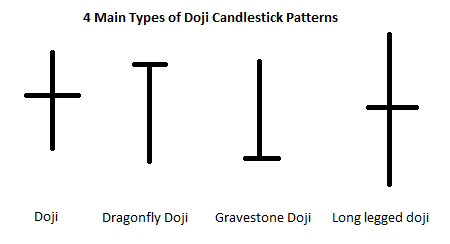
The Doji is a unique candlestick where the open and close prices are nearly the same, creating a very small or non-existent body. It indicates a tug-of-war between buyers and sellers and is often a precursor to a market reversal. There are four primary types of Doji:

Neutral Doji: With identical or nearly identical open and close prices, this pattern shows a balance between buying and selling pressure.

Long-Legged Doji: Characterized by long upper and lower shadows, it represents heightened volatility and market uncertainty.

Dragonfly Doji: This pattern has a long lower wick and little to no upper shadow, showing that sellers initially dominated, but buyers later regained control.

Gravestone Doji: The opposite of the Dragonfly, it features a long upper shadow and little to no lower wick, suggesting buyers pushed prices up but were overwhelmed by selling pressure before the close.

Bullish Reversal Patterns – Turning from Bearish to Bullish

Bullish reversal patterns suggest that a downtrend may be ending, and an upward trend is likely to follow. These are some of the most important to recognize:

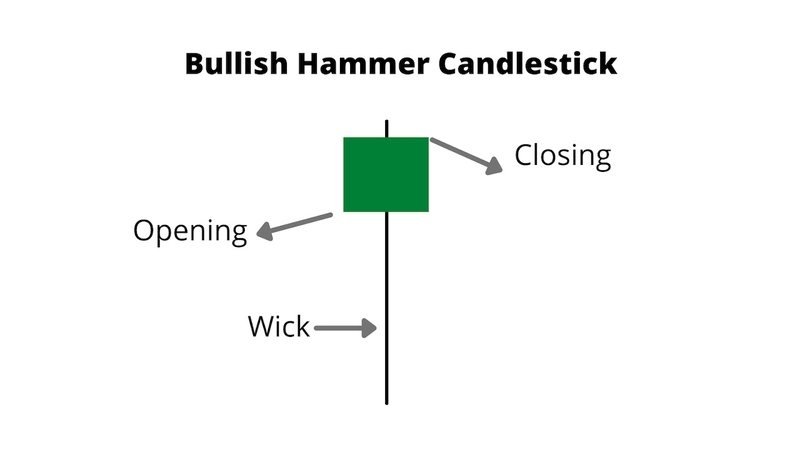
Hammer: This candle has a small body near the top and a long lower wick, indicating that despite strong selling during the session, buyers managed to push the price back up by the close. It often marks the beginning of a bullish reversal.

Morning Star: A three-candle pattern. The first is a bearish candle, followed by a small-bodied candle (indicating indecision), and finally, a strong bullish candle. This combination signals a shift from bearish to bullish sentiment.

Bearish Reversal Patterns – Turning from Bullish to Bearish

Bearish reversal patterns suggest the end of an uptrend and the potential beginning of a downtrend. Key examples include:

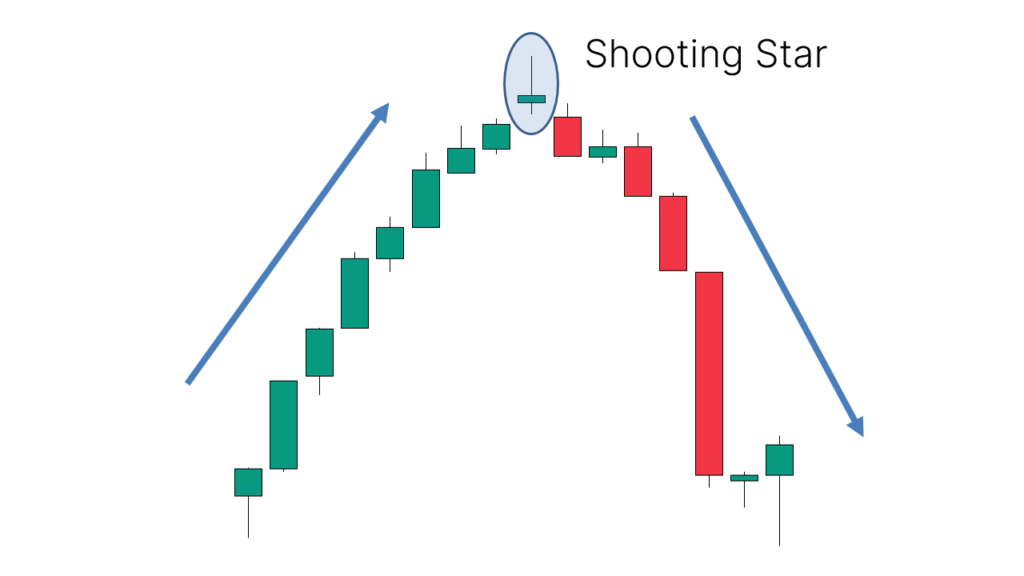
Shooting Star: The inverse of a hammer, this candle has a small body at the lower end and a long upper wick, indicating a failed attempt by buyers to sustain higher prices, with sellers regaining control.

Evening Star:

Evening Star: This is the bearish counterpart to the Morning Star. It consists of a large bullish candle, a small indecisive candle, and a large bearish candle—signaling a reversal from bullish to bearish sentiment.

By learning these patterns, traders gain the ability to anticipate shifts in market direction more effectively.

Using Candlestick Patterns In Your Trading Strategy

Successfully incorporating candlestick patterns into your trading approach requires both discipline and patience. Rather than reacting to every pattern that appears, focus on identifying high-probability setups that align with broader market conditions.

Enhancing candlestick analysis with other technical tools—such as moving averages, RSI, or trendlines adds valuable confirmation, leading to more confident and strategic decision-making. 

Keeping a trading journal to document patterns, outcomes, and insights is essential. Over time, this practice helps refine your strategy and identify what works best in various market conditions.

In addition, staying informed about macroeconomic events and recent market developments allows for a deeper interpretation of candlestick signals. When combined with this broader context, your analysis becomes more accurate and profitable.

Conclusion

Candlestick patterns remain a core component of effective technical analysis. They offer traders insights into market sentiment and price behavior, which can help minimize risk and improve decision-making.

By mastering these patterns and understanding their implications, traders can better recognize potential reversals and emerging trends. When used alongside complementary indicators and a solid grasp of market context, candlestick analysis becomes even more powerful.

A disciplined focus on high-probability setups, consistent record-keeping, and an awareness of the overall market landscape can significantly enhance trading performance and support long-term growth in market knowledge and profitability.